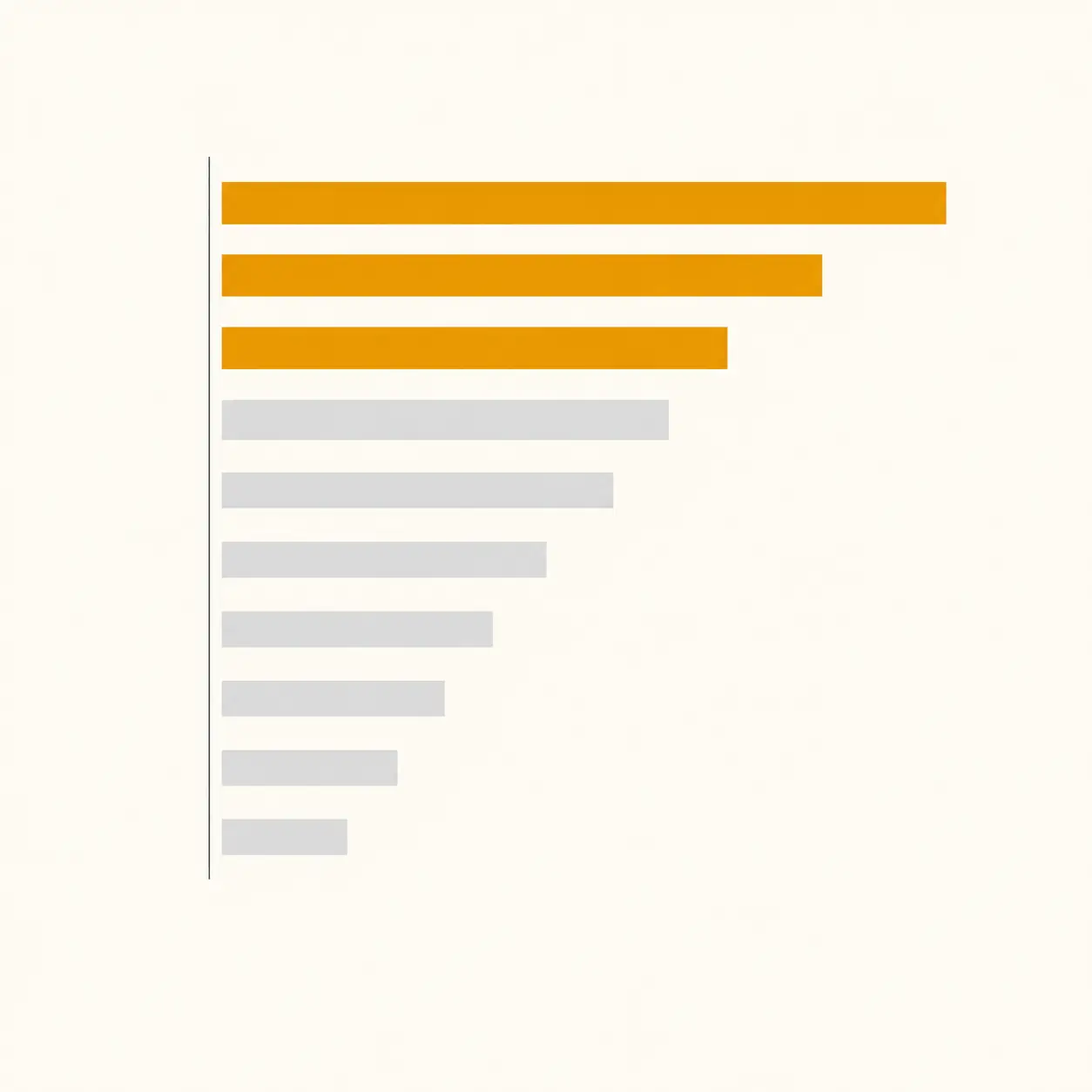
It’s the question we get most, and it’s the wrong one.
Not because there’s no answer, but because hours are a unit that hides the thing you actually care about.
The four-session tax
Two families each book twenty sessions with equally good tutors.
Family A’s tutor meets the student cold. Session one: get to know you, what are you struggling with, let’s try some problems and see. Session two: more of that. By session four or five, the tutor has a decent picture and real work begins.
Family B’s tutor read a diagnostic before walking in. Session one starts on the highest-cost gap.
Same money. Same tutor quality. Four sessions of difference before anyone has learned anything.
Across a semester, that gap compounds — because it isn’t only the lost sessions. It’s that Family A’s tutor is building their picture from what the student says is hard, and students are unreliable narrators of their own gaps. Everyone knows what feels hard. Almost nobody knows what’s expensive.
Feels hard vs. costs points
These are different lists, and confusing them is how prep time gets spent badly.
A student will tell you geometry is their weak spot because geometry feels bad. Meanwhile they’re quietly losing more points to a pacing problem in the reading section that never feels like anything — they just run out of time and guess the last four.
Ask them and you’ll hear about geometry. Measure it and you’ll find the reading.
The question to ask instead
When you’re evaluating any tutoring service, ask one thing:
What will my child’s tutor know about them before the first session starts?
If the answer is “nothing, they’ll get to know each other” — that’s fine, but be clear about what you’re buying. You’re paying tutor rates for a diagnostic process.
If the answer is a specific ranked list of what’s costing points, you’re paying for teaching from minute one.
So how many hours?
It depends on the gap between where a student is and where they want to be, and any service that answers with a number before measuring anything is guessing at you.
But the more useful reframe is this: you have more control over how well the hours are spent than over how many you can afford. Most families are optimizing the wrong variable.